
Maybe some people remember those times, when multiplayer meant sitting on a couch with our best friends, sharing a bowl of chips and fighting over whose controller was the broken one. It was so simple, and everything was local. Fast forward to today, and gaming looks completely different from what it did ten years ago. In these times, many of them have become huge online worlds where players spend years building friendships, competing, and creating their own stories.
What started as people playing games on their own has grown into something much bigger. Online gaming became like a big social world, players meet with their friends, join communities, trade digital items, and spend years building their accounts. Understanding how this happened helps explain where the industry may be heading in the future.
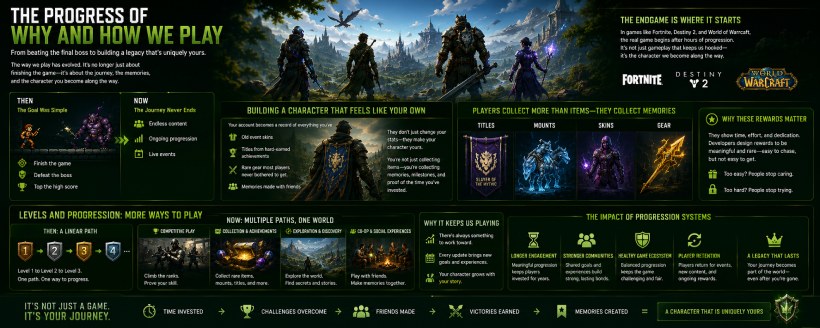
The Progress of Why and How We Play
A few years ago, we played very differently. Initially, it was all about finishing, defeating the boss or having your username on the high score list. And once that was done, it was time to move on to something new, but modern multiplayer games work very differently.
If you think about games like Fortnite, Destiny 2, or World of Warcraft, the “game” itself doesn’t start until you’ve already spent twenty hours in it. This is what developers call the “endgame.” What keeps people hooked isn’t just the gameplay, but also the character they end up becoming after some time.
For example, their character ends up carrying all these small things they’ve picked up along the way, like an old event skin, a title from something they struggled through, or even a piece of gear that most players never bothered to get.
Building a Character That Feels Like Your Own
So one reason players stay attached to online games for so long is that their account eventually becomes a record of everything they’ve done. The longer you play, the more your character begins to reflect your personal journey.
Some of these come from things you did a long time ago that newer players will never even have access to, or from moments where you and your friends kept trying something until it finally worked. Or sometimes it’s just being around for events that don’t exist in the game anymore. None of it really changes your stats, but over time it adds kind of things to your character that make it feel a bit more like yours.
This is one of the biggest differences between older games and modern multiplayer games. Players aren’t only collecting items, but they’re basically collecting memories, milestones, and proof of the time they’ve invested.
Anyone who has spent time in a large online game has probably had the experience of seeing another player with a rare item and immediately wondering how they got it. These can be:
- Titles
- Mount
- Skin
- Piece of gear
And developers know very well how important these rewards are, and that’s why progression systems have become more and more high-quality over time. Players keep getting new rewards to chase, but the ones people actually care about still take time, effort, or a bit of luck to get. If everything was handed out too easily, obviously most people would lose interest pretty quickly. But if nothing ever felt realistically achievable, players would stop trying at all.
Levels and Progression
Finding the right balance is one of the reasons some multiplayer games stay popular for years while others struggle to keep their communities active. Progression has changed in another important way too, because in older games, you went from Level 1 to Level 2 to Level 3.
But today, players can spend their time in completely different ways while playing the same game. They can focus on climbing competitive rankings, and spend hours collecting different items. And some people might ignore competition entirely and simply enjoy exploring new content with friends.
Skins, Emotes, and How Players End Up Spending Money
If you’d try explaining in 1995 that people would one day spend huge amounts of money on digital clothes for characters they don’t even own, most would probably think it sounds ridiculous. But that’s basically what in-game stores have become today, and a very normal part of how modern games work.
A big reason this works is how easy it all is to get into. A lot of the biggest games out there don’t cost anything to download, so you can just jump in and start playing. But at some point, if you want your character to feel a bit more like you or unique, you have to spend some money for it.
Why Players Spend Money on Digital Items?
People usually buy digital items for different reasons, for example personal taste, habit or how they feel connected with the game itself.
- Self-expression: When people spend so much time online, their in-game character often ends up feeling like an extension of themselves. It’s just about psychology, an easy way to show a bit of personality without saying anything.
- Community support: A lot of players buy items simply because they enjoy the game and want to help the people who made it keep things going.
- Utility and edge: Some items make things a bit easier or speed up progress, although this is also where game design can get a bit tricky and start to feel unfair if it goes too far.
When you actually look at the numbers, it gets pretty wild how big these marketplaces are. In some games, the value of items can shift a lot depending on updates or even what’s happening outside the game. And when something becomes rare, people are sometimes willing to pay crazy amounts for it, even hundreds or thousands of dollars.
Digital collectors are those who don’t really focus on playing the game, and they’re rather trading items. They keep an eye on prices, try to figure out what might become popular, and buy things they think will go up in value. It’s a bit like a stock market, just with in-game items instead of real companies.
But if everything feels like it has a price tag, it can quickly ruin the mood. So developers have to be careful that the shop doesn’t get in the way of actually playing. If a game keeps pushing you to spend money, it stops feeling like something you do for fun and starts feeling more like a store. The better ones keep purchases mostly to looks, so paying doesn’t give anyone an unfair advantage.
Do You Really Own What You Buy in Games?
The most asked question in the gaming world is what does it actually mean to “own” something in a game. Until now, the answer was very simple. If a game shut down, everything you bought or earned in it disappeared with it, and in practice you never really owned the item itself, only access to it while the servers were still running.
PC and Blockchain
PC gaming and blockchain ideas started to connect around this topic, especially because blockchain was often presented as a way to make digital ownership clearer through shared records that aren’t controlled by just one company. So that leads to a pretty simple but uncomfortable question. If someone spends hundreds of hours earning a rare item, should they really not be able to sell it, or should it be stuck inside one game forever with no way to use it anywhere else?
And the industry is still pretty divided on this. Platforms like Valve already let players trade items, but it all stays inside their own system and is usually tied to store credit, so the company still has full control over how it works. Blockchain-based games are different, because they give players more freedom to trade items openly without the developer sitting in the middle of every transaction.
But not everyone is convinced by that idea. A lot of players are skeptical, and that reaction isn’t really surprising, especially when early blockchain games ended up focusing more on speculation and trading than actual gameplay, which made them feel closer to marketplaces than proper games.
At the same time, things are slowly changing. For example, in a best-case future, an item you earn in one game could even carry over into another completely different game. The idea sounds exciting, but in practice it would take a level of cooperation between companies that still feels a long way off.
| Feature | Traditional gaming | Modern interactive gaming |
|---|---|---|
| Primary goal | Finishing a story | Playing, socializing, and self-expression |
| Time | 10-40 hours | Years |
| Ownership | Physical disc or cartridge | Digital license or on-chain asset |
| Economy | Fixed price | Free-to-play with microtransactions and player trading |
Games Where Players Decide What Happens
Online games aren’t as tightly controlled as they used to be. Instead of following a fixed path made by developers, players are often the ones shaping what the game turns into over time. In a lot of modern games, the real content comes from the community, not the studio.
When Players Not Only Play
These days, the gap between the creator and the player becomes thin in some areas. Some players do more than just play, because they create modes, create maps, or devise entirely original methods to utilize the game. Or sometimes, something created in a bedroom becomes popular throughout the entire game.
A few things players can end up doing:
- creating their own game modes or maps
- building communities inside servers
- setting up their own rules and roles
- finding unexpected ways to use game mechanics
Did you know that a lot of this happens because players don’t always use the tools the way they were originally intended? Instead of just fighting or completing objectives, they might build towns, assign roles like guards or traders, or basically turn the game into something closer to a living world.
The reason this works is people get more attached when they help create what’s happening. For developers, the hard part is knowing how much to step back. If they control too much, the game feels restricted. But if they don’t control enough, things can fall apart or become unpleasant for new players. Most of the time, it’s about finding the middle, where players have freedom, but the world still holds together.
Gaming as a Place for Socializing
If recent years have taught us anything, it’s that gaming is an opportunity if you want socializing. For many, dedicated chat servers and community channels have replaced the local pub or the school. We log on to play and to hang out.
Well, one of the reasons is that interactive gaming has started to include things that aren’t really games at all. Millions of people now show up in virtual spaces to watch live concerts from global pop stars, and movie trailers are often released inside game worlds too. It’s all slowly turning into one space where different types of media and events happen.
For introverts or people living in isolated areas, these virtual spaces offer an opportunity to connect, something that might be difficult or impossible even to find locally. In the virtual world, you aren’t judged by your physical appearance, your wealth, or your location. You are judged only by your actions, your creativity, and your activity as a member of the group.
This shift has also changed how people watch and experience games. With streaming platforms, a lot of people now follow games without actually playing them. They watch skilled players tackle tough challenges or listen to streamers comment on matches, similar to how people watch sports like football. So the line between playing, watching, and creating content is much less clear now. Someone might watch a stream in the afternoon, play the game later that day, and then share clips online before going to sleep.
However, as these spaces keep growing, they start running into problems similar to real cities. Managing millions of people from different countries, speaking different languages, all interacting at the same time isn’t simple. It’s one of the biggest challenges community teams have to deal with today.
What Still Needs Fixing Is Online Gaming World
Even with how far online games have come, there are still a few basic problems that keep showing up and affect the gaming experience:
- Latency: For games to feel responsive, the delay between your action and what happens on screen needs to be almost unnoticeable. That’s why fast, stable internet connections matter so much.
- Cross-Platform Play: More games now let people play together across different devices, but it still doesn’t work properly in every game.
- Moderation: As games become more like social spaces, keeping players safe and handling toxic behaviour has become a much bigger and more important job.
When Games Start to Feel Real?
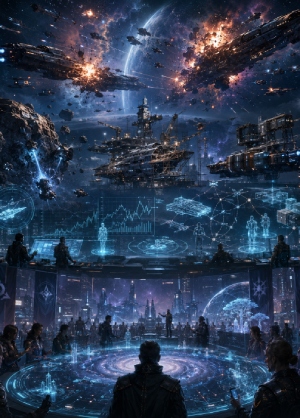
To understand how complex these systems can get, it helps to look at a real example. Take EVE Online, a space MMO that has been running for over 20 years. Its in-game economy is so detailed that the developers even brought in a real-world economist to keep an eye on it.
In EVE, almost everything you see is built by players, like ships, stations and even weapons. They gather resources, craft items, and trade them with each other. Because of that, big battles have real impact inside the game. When hundreds of ships get destroyed, that’s the result of a huge amount of player time and effort disappearing at once, and it can affect the whole in-game economy for a long time.
That’s also what makes the game so intense. Losing something valuable doesn’t feel trivial, and players often get genuinely nervous when they take expensive ships into risky areas. Over time, this has led to huge player-run groups that work a bit like real companies, with leaders, roles, and even internal politics. Some players even spend years spying on rival groups or trying to disrupt them from the inside.
In the end, it’s not at all like a normal game, but more like a parallel world with its own rules. And while EVE Online is an extreme case, a lot of its ideas are showing up in more mainstream games too. It’s a good example of what happens when players are given real control and real consequences.
When Players Become the World Builders
All in all, what really matters in gaming today isn’t how advanced the technology gets, but what people actually do with it. Today, players shape their own experience, build communities, and turn simple games into something more. Because of that, games start to feel less like something you “finish” and more like places that keep changing as people use them.
Some people are playing just to relax, others to meet friends, and some end up building things that go way beyond the original game. In the end, what really matters is less the game itself and more what happens when a lot of people start shaping it together in their own way.